
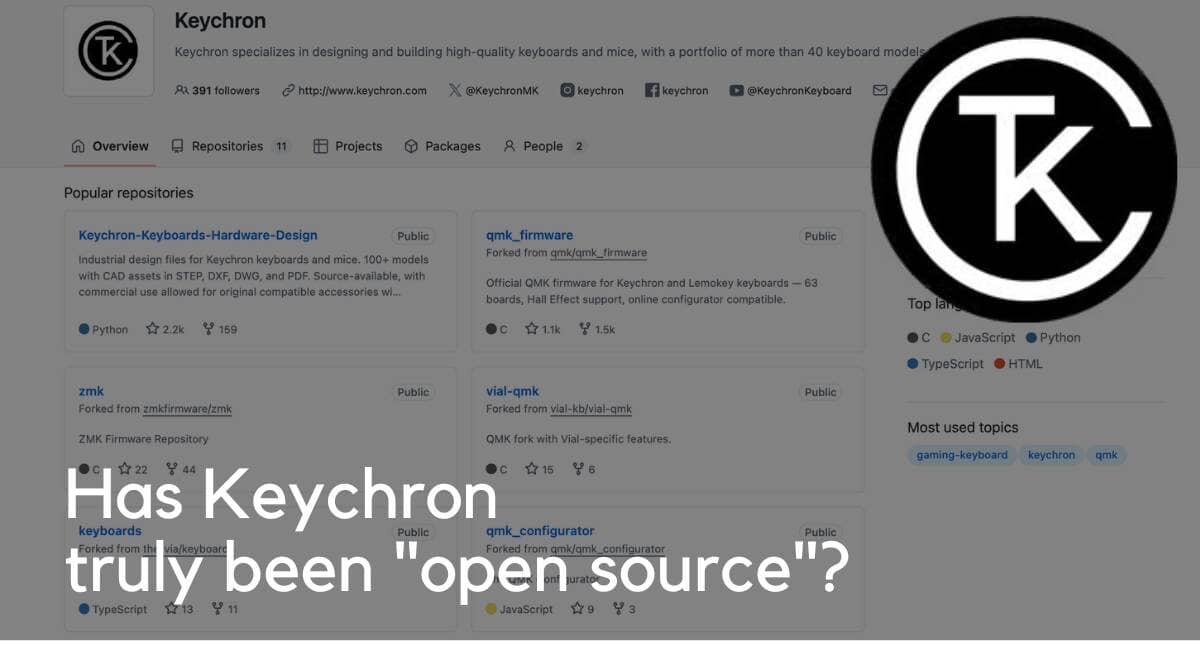


Keychron has released the hardware design files for its keyboards and mice.
The announcement says it includes 640+ production CAD files across 83 models, in STEP / DWG / DXF / PDF formats, free for personal and educational use—so it looks like a pretty bold move.
The release covers the Q / Q Pro / Q HE, K Pro / K Max / K HE, V Max, L, P HE, and even M / G series mice.
But I don’t think this news ends with a simple “Keychron is amazing…”
At first glance, calling it “open source” seems spot-on, but GitHub’s official FAQ clearly states this initiative is not “open source,” but “source-available.”
So what exactly did Keychron open up?
And what does this release mean for keyboard culture?
Let’s sort it out.

The nuance of “open source” is a bit different
Regarding this release, Keychron’s posts on X and its announcement email are very positive.
Looking at what they call open source, it’s labeled “source-abailable,” and it prohibits copying, manufacturing, or selling Keychron products themselves—or products that are essentially the same.
So it’s not like everything is suddenly free to do whatever you want with.
Let’s compare “open source” and “source-available” based on GitHub’s FAQ.
| Perspective | Open source | Source-available |
|---|---|---|
| Definition | Not only access to source code, but also permission—under the license terms—to redistribute and distribute derivatives | You can view the source/design files, but there are additional restrictions on use, so it’s not open source |
| Redistribution | Must generally be allowed | As a rule, you must not re-upload to other marketplaces or CAD libraries |
| Modifications | Must be allowed | Modifications allowed for personal learning, hobby use, and non-commercial use |
| Distribution of derivatives | Must be allowed | Sharing is allowed within the license, but presenting it as a full Keychron product replacement is not allowed |
| Commercial use | Cannot unfairly restrict specific fields or sales | Selling compatible accessories is allowed, but selling full keyboards/mice or near-identical copies is not allowed |
| Trademark use | Depends on the license, but it’s not a core point of the open source definition | You can’t use the Keychron name or logo as your own brand. Only compatibility claims are allowed. |
| How this applies here | Under the OSI definition, free redistribution and distribution of derivatives are required | Keychron’s own FAQ explicitly states it’s “not open source” |
Reference: https://github.com/Keychron/Keychron-Keyboards-Hardware-Design/blob/main/docs/license-faq.md
How far Keychron opened things up—and where it drew the line—might be what makes this move so interesting.
What Keychron opened up is post-purchase “learning” and “freedom to customize”

If you look at the README, Keychron describes this release like this:
Study real CAD. Remix plates and cases. Design compatible accessories.
https://github.com/Keychron/Keychron-Keyboards-Hardware-Design/blob/main/README.md
They also list uses like learning design and hardware packaging, remixing cases/plates/accessories, checking dimensions/structures and part integration, creating community mods (non-commercial community customizations) and add-on parts, and even contributing to documentation and fix proposals.
In other words, this release isn’t meant to let you copy a finished product and sell it as-is.
You can see it as Keychron wanting to contribute to the keyboard community by offering an entry point to learn from Keychron off-the-shelf products, mod them, and expand compatible accessories and the surrounding culture.
 Kawamura
That matches what I heard before when I spoke with Nick—about wanting to contribute to the keyboard community.
Even the file format explanations are thorough—it shows how serious they are
This data release is extremely detailed.
They explain very carefully what each format is best for.
For example, they say STEP files can be used to check shapes, measure dimensions, and verify fit for compatible accessories, and can be opened in tools like FreeCAD and Onshape.
They explain DWG / DXF can be used to review 2D drawings, modify plate shapes, and output shapes for CNC/laser processing, and can also be handled in tools like LibreCAD and QCAD.
PDFs are also positioned as being for checking drawings and dimensions.
So it doesn’t feel like they just “uploaded the design data”—they’ve laid out a path for how to work with it, too.
It almost feels as if Keychron intends for people to learn the joy of making things through their products.
Keychron has long been a fairly open-leaning brand
Keychron is a pretty open brand.
Keychron has been releasing firmware and JSON files for their QMK / VIA compatible models for some time now.
That’s also related to the fact that QMK itself is GPL-based open source, and QMK-based shipping firmware has a source disclosure obligation※.
※https://docs.qmk.fm/license_violations
That said, releasing CAD design files goes beyond that obligation, and you can really see Keychron’s character in it.
If a manufacturer properly supports VIA, it needs to publish at least the QMK-based firmware.
This design file release feels less like a sudden change in direction and more like an expansion of their existing “open attitude” into the hardware side.
This release is unlikely to be a one-sided disadvantage for Keychron
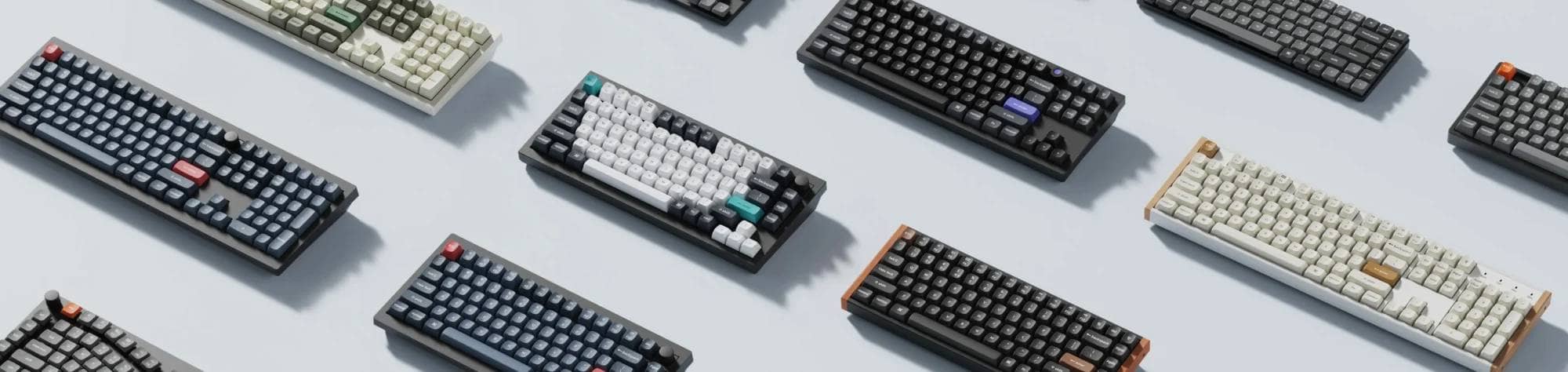
This is probably the core point.
There’s no doubt Keychron has been fairly open-leaning for a while.
Looking at the firmware, JSON files, and implementations published on GitHub, I think that’s pretty close to the truth.
However, this hardware design file release is not fully open source.
Reading the GitHub FAQ, it’s “source-available,” with clear restrictions on selling copies.
What’s scary about open source is that your product can be legitimately reproduced and sold.
In other words, it can even carry the risk that your own products stop selling.
But since this is positioned as “open-sourcing to provide learning and educational opportunities,” it’s fair to say the risk of full-on knockoffs spreading is low.
Keychron could bridge off-the-shelf products and DIY builds seamlessly
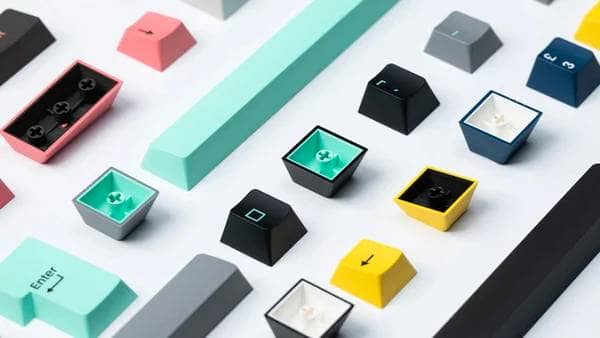
What’s interesting about this move is that rather than encouraging clones of the keyboards themselves, a finished-product brand is actively promoting a culture of modding, learning, and compatible development based on their existing products.
This could end up connecting DIY culture and finished-product culture seamlessly.
Just looking at the designs of a finished-product brand can be a learning experience, and it has the potential to foster a surrounding culture of plates, cases, accessories, and 3D-printed parts.
They might be aiming for a virtuous cycle: someone copies the structure and a new keyboard is born, it gets shared in the community, it catches Keychron’s eye and moves toward commercialization, something even better is created, and so on.
The biggest bottleneck in DIY culture is not having a setup for mass production.
I know from personal experience that while switch plates and PCBs can be made cheaply, it’s often difficult to realize ideas for aluminum cases, injection-molded parts, and mounting mechanisms at an individual level due to cost constraints.
They may be trying to solve these “limits of individual production” on the manufacturer side and find a way to collaborate that works well for both sides.
This also seems related to the movement around “Nape Pro,” which started from individual production.

How can Keychron stay in business while being this open?
What struck me about this move was that Keychron didn’t just share design files; they showed the brand’s overall philosophy.
To be clear, they haven’t made absolutely everything public in this series of open-source moves.
Their approach to disclosure isn’t strictly “open source,” but rather “source-available.”
They’re opening doors for learning, personal use, and the design of compatible accessories, while not permitting the sale of direct copies of the products themselves.
It’s best understood as protecting the core of their business while providing the community with the materials needed to foster growth and keyboard culture.
It’s a very calculated and well-designed way of opening up.
Keychron’s true strength doesn’t lie in the blueprints themselves, but in their mass production capabilities, quality, supply chain, continuous R, and the brand itself.
That’s exactly why they can choose to become stronger by opening up, rather than trying to protect themselves by staying closed.
summary

In the end, what Keychron released this time is not a world where you can “make anything and sell it freely.”
What they likely want to show is “an opportunity for the community to learn.”
Learning from finished-product quality and then customizing it will contribute a lot to the community’s growth.
I can’t wait to see what changes Keychron’s open approach brings to the global keyboard community.
- First published: April 11, 2026
- Last updated: April 11, 2026
- Research method: Official social media posts
- References / sources: https://x.com/KeychronMK/status/2042618854732358068 https://github.com/Keychron/Keychron-Keyboards-Hardware-Design/tree/main
- Conflicts of Interest: Product Offering: None Monetization Link in this paper: None
Greenkeys operates solely on performance-based advertising and does not use Google ads because they reduce usability.
Please support us through Buy Me a Coffee if you enjoyed reading the article so that we can continue to operate the media.