





[Introduction]
This document provides technical reference data for manufacturers and OEM/ODM partners designing keyboards for the Japanese market.
The Japan Layout Alliance (JLA) aims to streamline the development process by classifying the predominant physical dimensions currently prevalent in Japan.
– What is Japan Layout Alliance (JLA)? |TL;DR
- Background: Japanese-language keyboards have different spacebar stabilizer dimensions on different keyboards because there is no spacebar size standard like the ANSI layout. As a result, keycaps are not interchangeable and keycaps are difficult to replace. A keycap replacement culture has not developed.
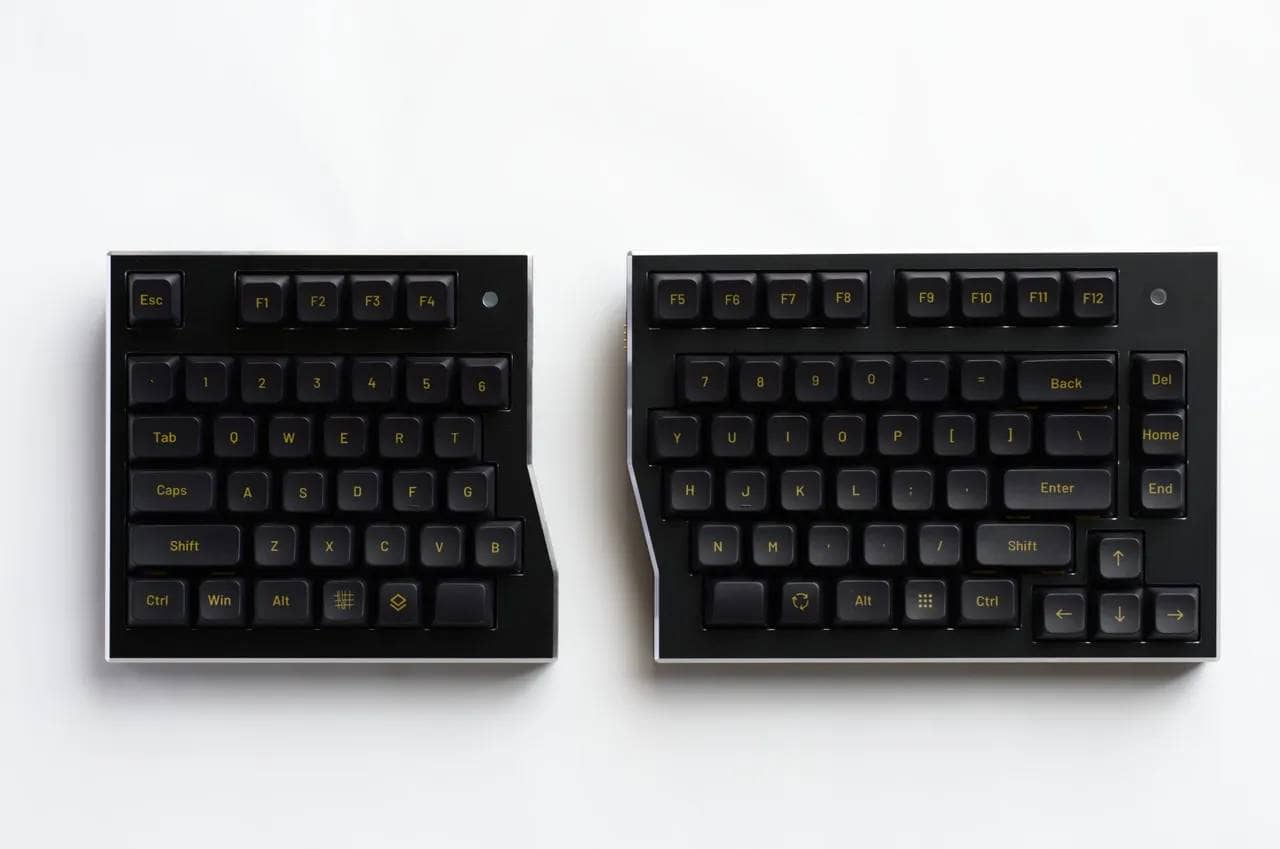
- Object: Keyboards with general Japanese layout (OADG 109 / Apple JIS) physical layout structure, as well as custom keyboards (QMK/VIA, etc.) and keycaps that support Japanese layout.
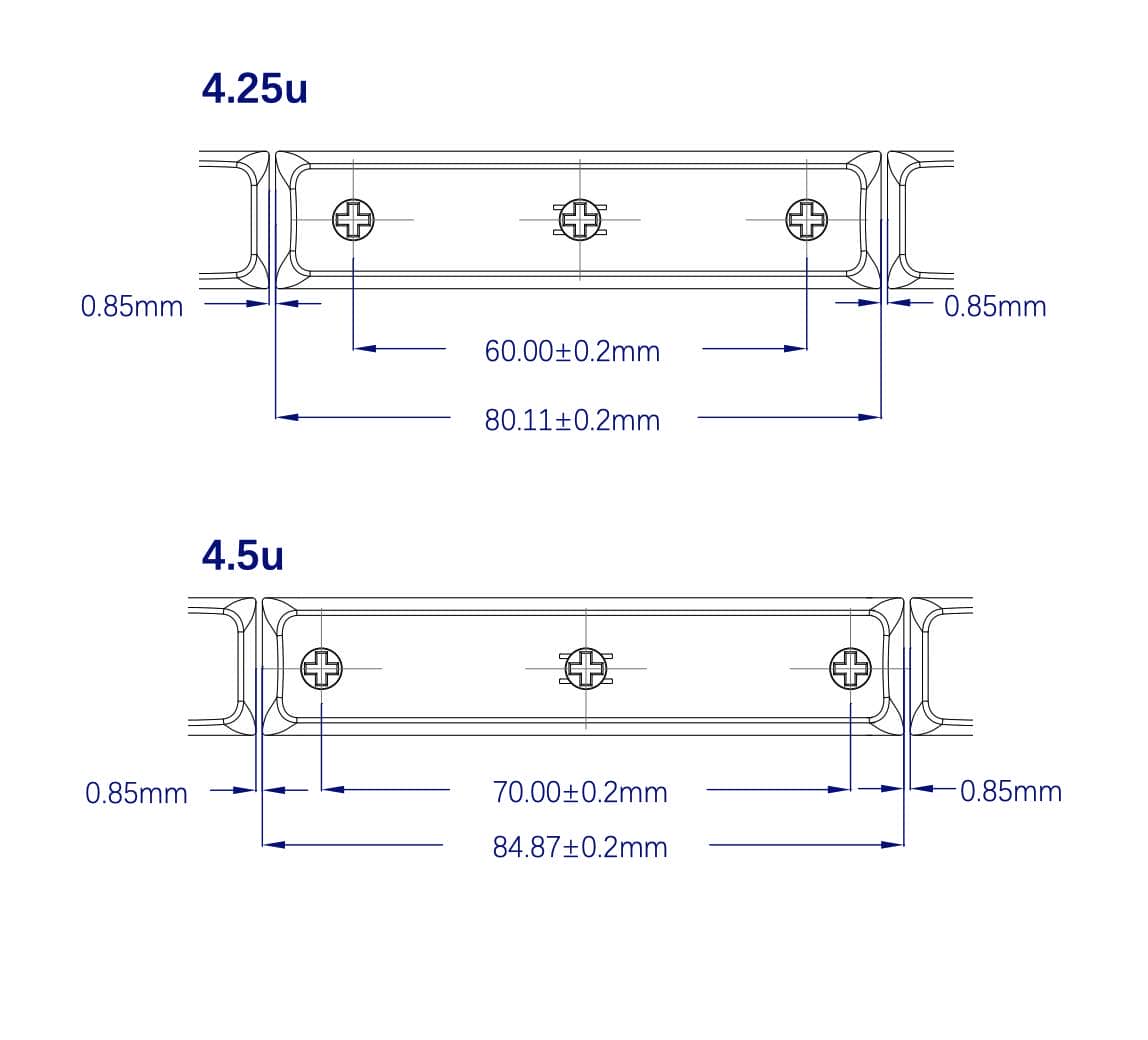
- Purpose: To ensure cross-brand compatibility by clearly specifying two classes of Japanese bottom-row (bottom-row) keyboards : 4.5u (stabilizer span ≈ 70mm) / 4.25u (stabilizer span ≈ 60mm ). The purpose is to enhance usability by attaching a JLA badge indicating compatibility to the relevant keyboard and keycaps. The change is not mandatory, but only to make it easier to identify existing products.
- Significance: Replacement parts are more readily available, simplifying Japanese keycap/keyboard operation.
- Notice: Even if you join JLA, it is up to your company to decide whether to include 4.5u/4.25u space bar or not. There is no enforcement of the standard when designing, developing and selling keyboards and keycaps for Japanese layout.
- Participation categories: Founding / Participating / Review (No restrictions. You can start with Review). For more information, click here ▷.
- How to participate:Submit form → Confirmation email within approx. 5 business days.
- Badges: JLA badges can be displayed on product pages, etc. – Guide|Downloads
Strategic Insight: Aligning with Japan’s “De Facto” Standards
Our independent research into the Japanese keyboard market reveals that spacebar dimensions are heavily concentrated into two specific specifications. These are not arbitrary numbers-they are the unwritten standards established by the market leaders.
- JLA-450 (4.5u):
Matches the layout used by a top-tier international mechanical keyboard brand that is highly popular in Japan’s enthusiast market. - JLA-425 (4.25u):
Aligns with the standard specifications of the major domestic and global peripheral giants that are widely used in the mass consumer market and electronics retail stores.
By adopting JLA-450 or JLA-425, you significantly enhance compatibility with the mainstream Japanese setups.
This is the most logical path to minimize “market entry risk” and maximize user acceptance.
(Source: JLA Independent Market Research on Spacebar Dimensions )
Market Background: The “Compatibility Gap”
Unlike the global ANSI layout, the Japanese keyboard market lacks a unified standard for the bottom-row layout (specifically spacebar and stabilizer sizing).
Currently, each manufacturer uses proprietary dimensions, creating a chaotic environment where users cannot easily replace keycaps.
This fragmentation limits the potential of the custom keyboard market in Japan.
About JLA: Position & Policy
Please note that JLA is a private, voluntary initiative and is not affiliated with JIS (Japanese Industrial Standards) or any government body.
These guidelines are non-binding recommendations.
We do not possess the authority to enforce design changes. Our role is strictly to “visualize” existing market realities to help manufacturers create products that are easier for Japanese users to adopt.
Technical Collaboration
The reference dimensions provided in this guideline are established in technical collaboration with industry leaders to ensure manufacturing feasibility and market compatibility.
- Keycaps Reference: Data provided by Keyreative
- Stabilizers Reference: Data provided by Gateron
- PCB Design Reference: Data provided by zFrontier
Design Philosophy: The “Common Language”
To solve the fragmentation described above, JLA has codified the two most dominant specifications in the market into a “Compatibility Class.”
By voluntarily adopting these dimensions, manufacturers can ensure their hardware speaks the same “physical language” as the existing ecosystem in Japan.
【JLA-450 (4.5u)】

Designed for the Enthusiast & Mechanical Keyboard Market.
- Reference: 4.5u Spacebar
- Context: Matches specifications often found in high-end mechanical keyboards preferred by enthusiasts.
- Target Audience: Gamers, Custom Enthusiasts
【JLA-425 (4.25u)】

Designed for the Mass Consumer & Office Market.
- Reference: 4.25u Spacebar
- Context: Matches specifications often used by major mass-market manufacturers found in electronics retail stores.
- Target Audience: General Consumers, B2B Installations
Why Adopt These Guidelines?
Even though participation is voluntary, following JLA standards offers practical business advantages:
- Resolving User Hesitation: Users often avoid keyboards with “unique” layouts. JLA compliance signals safety.
- Ecosystem Compatibility: Ensures fit with third-party keycaps.
- Verified Status: Registration allows you to display the JLA badge, building trust with Japanese consumers.
Registration & Official Listing
To obtain official badge data and confirm compliance, manufacturers are requested to register via the application form.
Public listing is entirely optional.
We respect your regional branding strategies and confidentiality requirements.
You can choose to remain anonymous (unlisted) on the “JLA Participating Organizations” list while still retaining full rights to use the JLA badges on your products.
Resources & Downloads


License & Disclaimer
- Text Content: Licensed under CC BY 4.0.
- Technical Drawings: The provided CAD/Technical drawings belong to their respective rights holders (Technical Partners) and are for reference use only. Redistribution or commercial sale of the raw data is prohibited.
- Disclaimer: JLA assumes no responsibility for manufacturing defects or compatibility issues arising from the use of these guidelines.
Last Updated: December 2025