
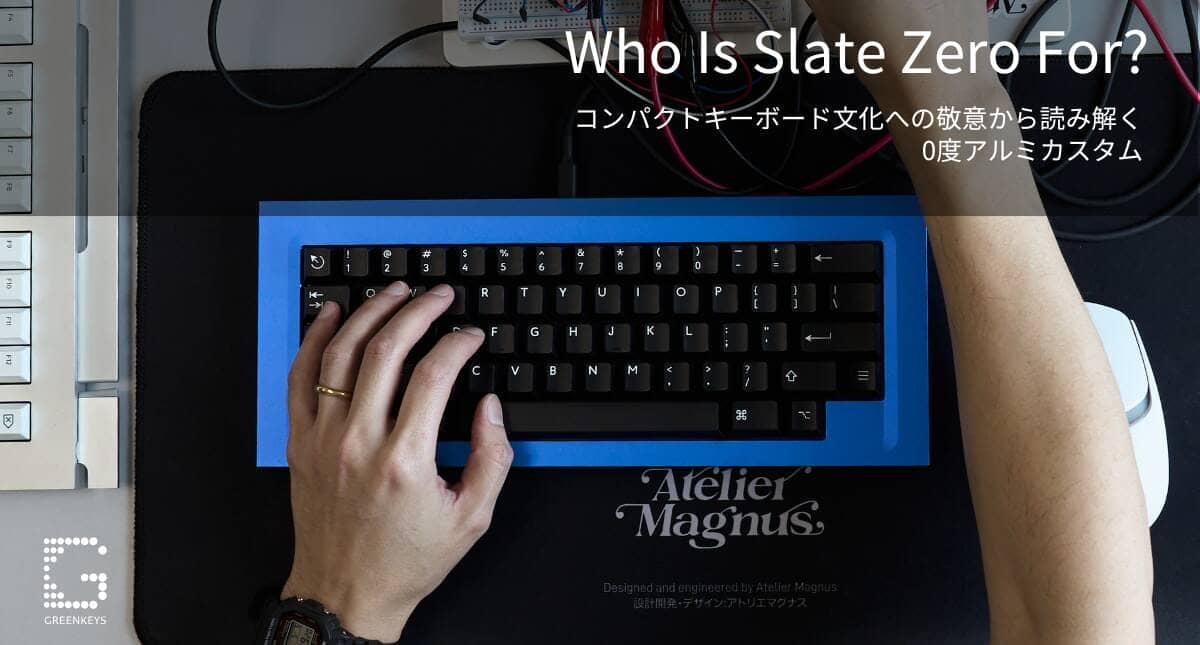


Atelier Magnus’s 60% custom keyboard “Slate Zero” has begun accepting group buy orders for the Japanese market through Yushakobo.

Slate Zero is an aluminum 60% custom keyboard developed by Atelier Magnus, featuring a 0-degree typing angle.
In Japan, the product has connections to the context of “HHKB,” which has long been supported by engineers and writers, and Greenkeys has covered their activities in the past.
However, Slate Zero is also a product whose intent is difficult to convey by simply describing it as “a 0-degree 60% keyboard.”
Kelvin Tan of Atelier Magnus explains that Slate Zero reinterprets the rationality and tool-like nature symbolized by compact keyboard culture, with respect for that heritage and through Atelier Magnus’s own aesthetic language.
This article organizes the philosophy behind Slate Zero’s creation and what kind of users it is suited for, based on the background shared by Kelvin.
This article was produced based on a request from Atelier Magnus.
This is not a hands-on review, but an article that organizes Slate Zero’s design philosophy according to Greenkeys’ editorial policy, based on provided and official information.

Development Background of Slate Zero as Told by Atelier Magnus
To organize the background of Slate Zero, we asked Kelvin Tan of Atelier Magnus the following six questions.
Six Questions Asked to Kelvin Tan
- The reason for creating Slate Zero
- Influence and feedback received from Japanese users
- How they perceive the HHKB-style compact keyboard culture
- The reason for adopting a 0-degree typing angle
- What experience they want users to have when placing Slate Zero on their desk
- What they most want to convey to Japanese users about Slate Zero
Additionally, Kelvin provided the following four perspectives as important background for Slate Zero.
- The Origin: How Slate Zero was born from dialogue and feedback with early Japanese users
- The Philosophy of Clinical Brutalism: Atelier Magnus’s design philosophy that emphasizes honesty in form, materials, and proportions rather than decoration
- Visual Symmetry and Multi Layout Versatility: The design intent to achieve both visual symmetry and multi-layout compatibility while respecting the HHKB layout
- Seamless Integration through Magware: Magware as a configuration pathway to make Mac/Windows environments and multi-layout PCBs easier to handle
What Kind of Product Is Slate Zero?
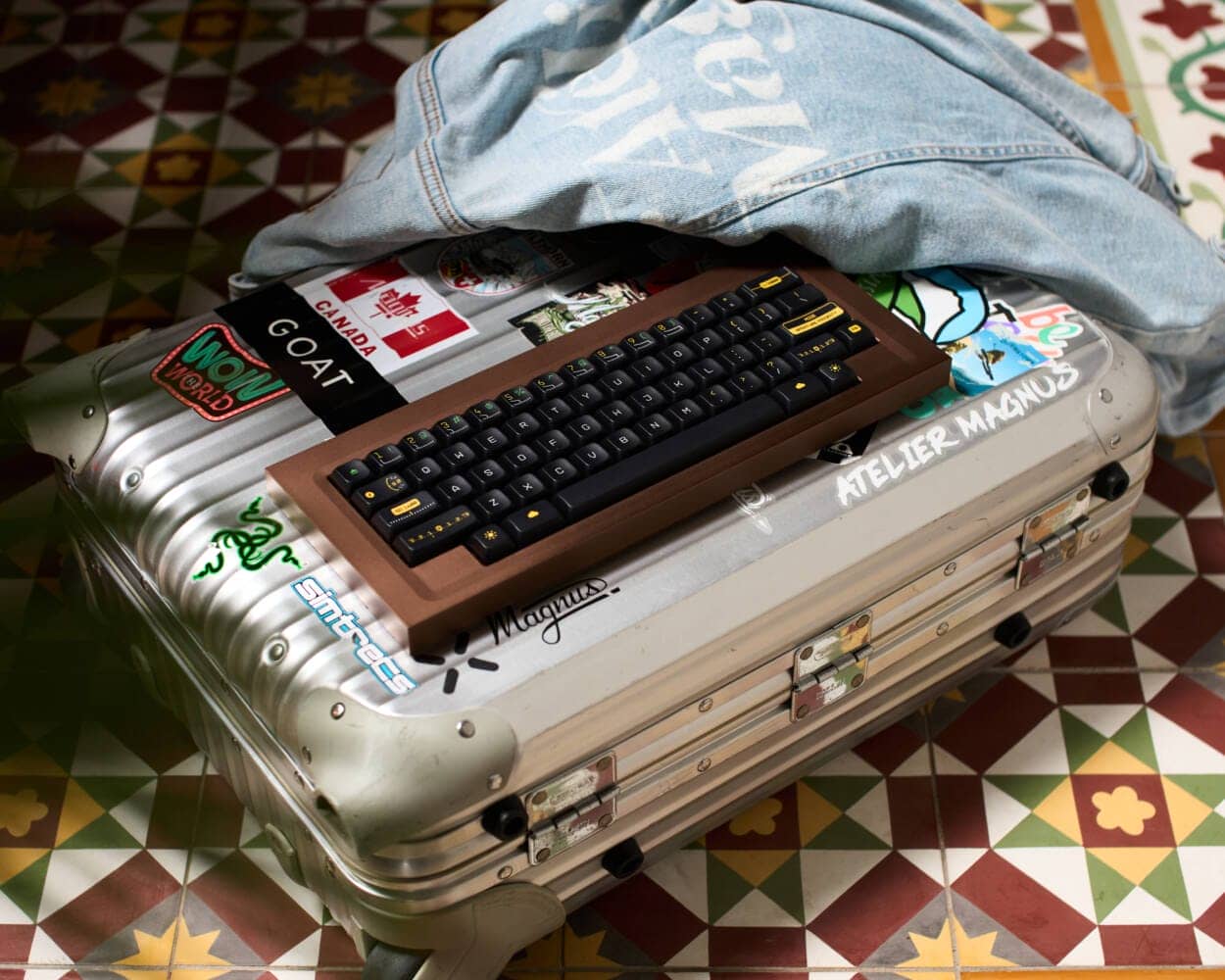
Slate Zero is a product that adopts a 60% layout reinterpreted through Atelier Magnus’s unique aesthetic while being conscious of the compact keyboard culture symbolized by the Apple M0110 and HHKB.
Here, we convey the background from which Slate Zero was born, based on an interview with Kelvin.
HHKB Mentioned as One Inspiration

From Kelvin’s explanation, it becomes clear that Slate Zero draws from multiple compact keyboard references.
Although not prominently featured on the official website, Kelvin also mentions the existence of HHKB when discussing Slate Zero.
Kelvin described the HHKB layout as “a legendary standard in compact keyboards.”
In Japan, many users have encountered compact keyboards through HHKB, and there is a culture that seeks not just space-saving qualities but also rationality and beauty as a tool in small keyboards around 60%.
Among them, at least from the Japanese users Atelier Magnus encountered, they felt an attitude of treating keyboards not merely as peripherals but as tools used carefully in daily life.
In particular, the refined look of a keyboard without a function row can be said to be one of the symbols of compact keyboards.
Slate Zero seems best viewed as a product that reinterprets the 60% keyboard from Atelier Magnus’s perspective, while respecting the compact keyboard culture symbolized by HHKB and Japanese craftsmanship.
 Kawamura
In the interview, Kelvin mentioned that a Japanese software engineer helped Atelier Magnus understand the logic of placing the Control key in the Caps Lock position.This advice also influenced Slate Zero’s layout design. Its logical, efficiency-focused approach aligned very well with Slate Zero’s design philosophy, leading to its adoption as the default.
Another Inspiration Is the Apple M0110
Another inspiration for Slate Zero is the Apple M0110.
The Apple M0110 can be said to symbolize the simplicity and beauty of constraints that early computer keyboards possessed.
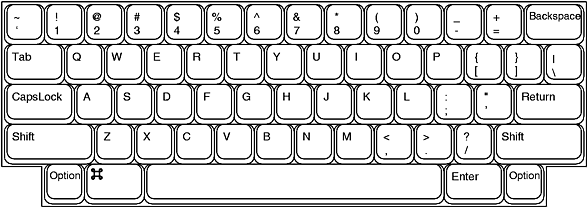
In HHKB History, HHKB developer Eiichi Wada states that HHKB’s roots lie in the Aleph keyboard, so their origins differ.

However, the Aleph keyboard discussed in HHKB’s development history and early compact keyboards such as the Apple M0110 share a similar atmosphere in their simple layouts, with no numpad, function row, or dedicated arrow keys.
Slate Zero attempts to reconstruct the clarity and primitive beauty as a tool that such early computer equipment possessed as a modern custom keyboard.
Therefore, Slate Zero seems best viewed not simply as an “HHKB-like keyboard,” but as a product that reinterprets the rationality and beauty as a tool that compact keyboards possess through Atelier Magnus’s design language.
KawamuraPersonally, Slate Zero, born while referencing the philosophies of small keyboards from different lineages, appeared to me to be packed with the aesthetics of compact keyboards.
Atelier Magnus’s Interpretation of Compact Keyboards
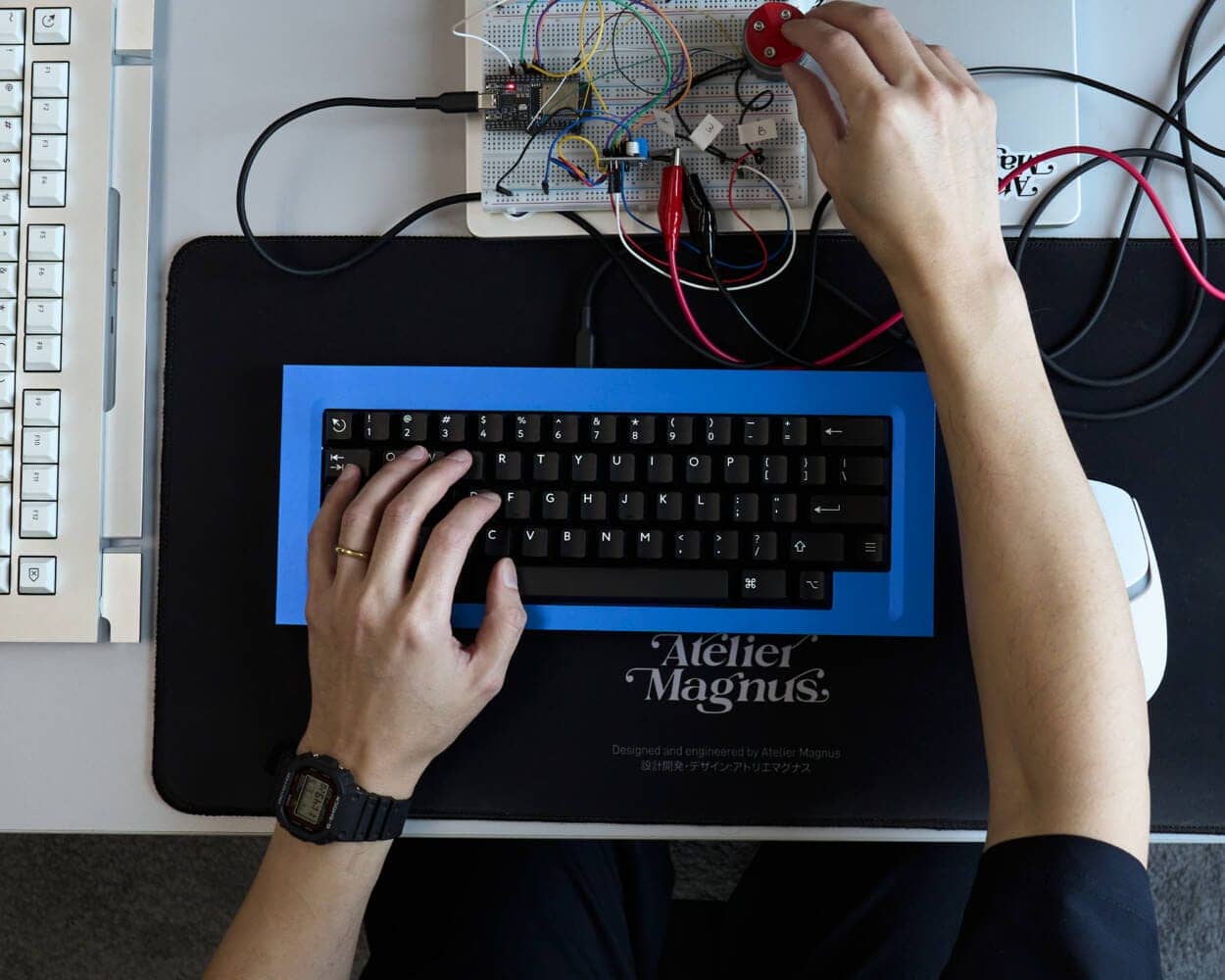
Slate Zero, inspired by HHKB and Apple M0110, adds Atelier Magnus’s unique interpretation to the foundational ideas.
In this article, let’s unravel the design philosophy behind Slate Zero.
Slate Zero Began with a “Reconsideration” of Mechanical Keyboard Form

Kelvin points out that many current high-end keyboards appear as variations of “angled boxes” in terms of form.
Slate Zero began with a “reconsideration” of this form.
They first distanced themselves from hobby-oriented standard expressions and focused on “primitive form” and the intent of the materials themselves.
He explains that by removing excess elements from the keyboard’s form and returning to an essential form, they arrived at a rectangular form that conveys calmness, balance, and clarity, and a 0-degree typing angle.
The Philosophy of Clinical Brutalism
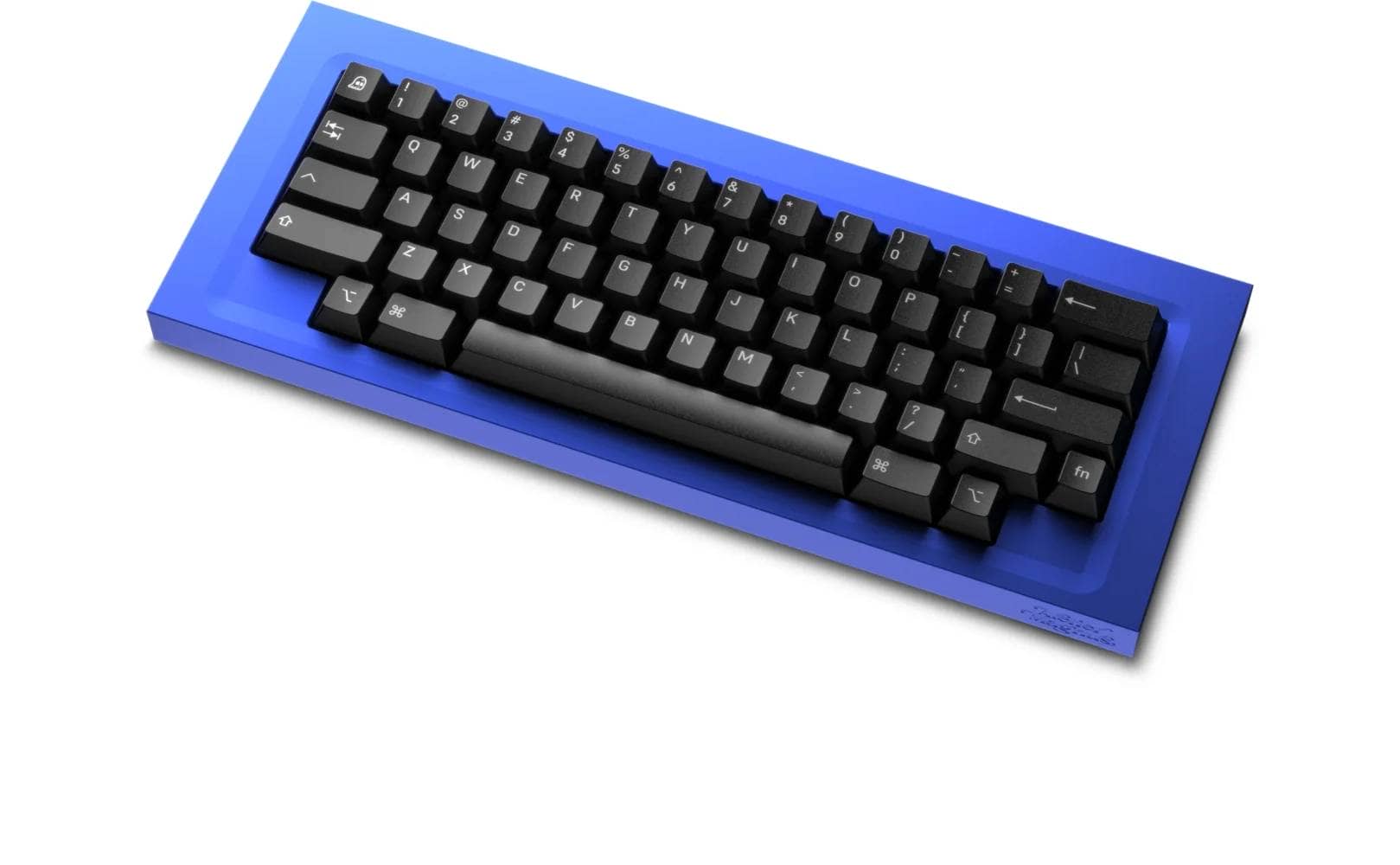
Atelier Magnus emphasizes “Clinical Brutalism” as a design philosophy.
“Brutalism” is an architectural style and philosophy that began in Britain in the 1950s.
It is characterized by rugged, powerful designs that utilize the material qualities of exposed concrete, brick, steel frames, and other materials as-is, without any paint or decoration.

In Brutalist philosophy, not hiding materials or structure and showing the honesty of form itself is emphasized.
However, Clinical Brutalism here can be interpreted as an approach closer to creating a quiet, precise presence through the mass of the aluminum case, horizontal profile, bezel proportions, and surface finish, rather than foregrounding roughness.
Slate Zero’s bezel proportions and surface finish were designed as “architectural elements.”
In other words, it can be said to be a design that brings architectural thinking into keyboard form.
Their goal, borrowing Kelvin’s words, is to create “a tool worthy of high-precision professional environments and design ateliers.”
They achieve this through the simplicity of 0 degrees and a multi-layout PCB that allows customization of almost all 60% layouts.
KawamuraKelvin also mentioned that Slate Zero’s design philosophy lies in “Refining to Zero.” This refers not only to the “0-degree typing angle” but also to the idea of removing excess decoration and complexity, purifying form, materials, operability, and visual balance as much as possible.
The 0-Degree Typing Angle Is a Fusion of Design Aesthetics and Practicality
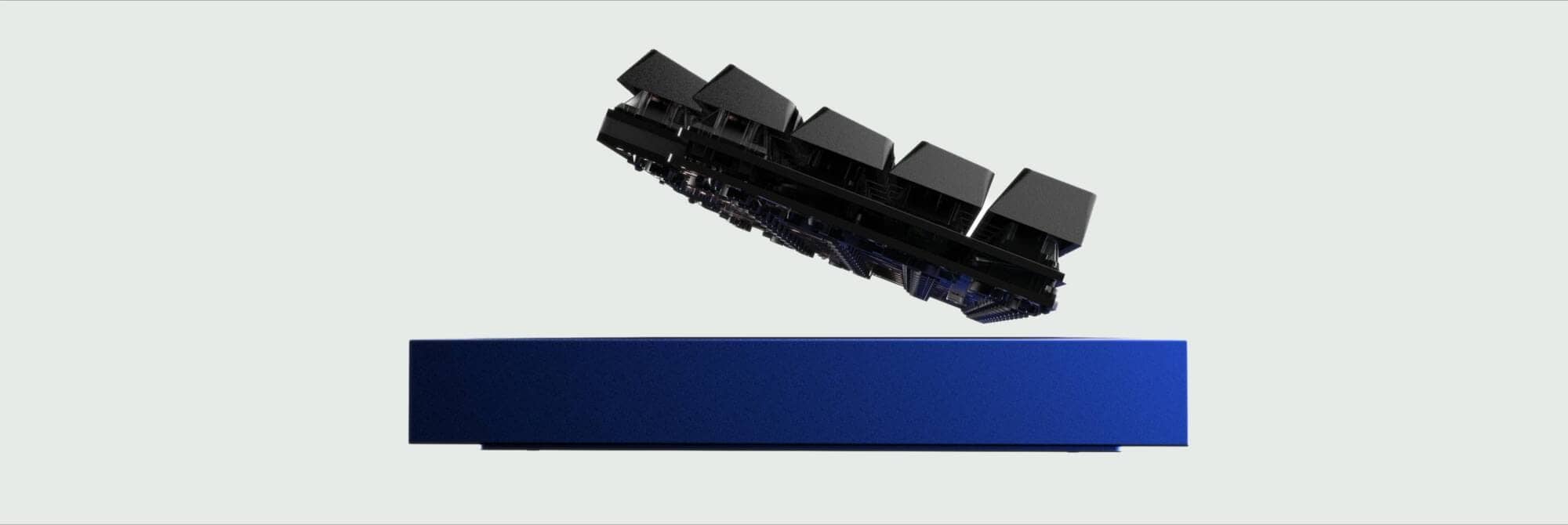
The 0-degree typing angle is positioned as an element that goes beyond mere visual characteristics.
It is also a challenge to express the philosophy of “low-profile keyboards” that Kelvin prefers to use in the Cherry MX style.
In keyboards based on Cherry MX-compatible switches, the overall height tends to increase due to the height of the switches and keycaps.
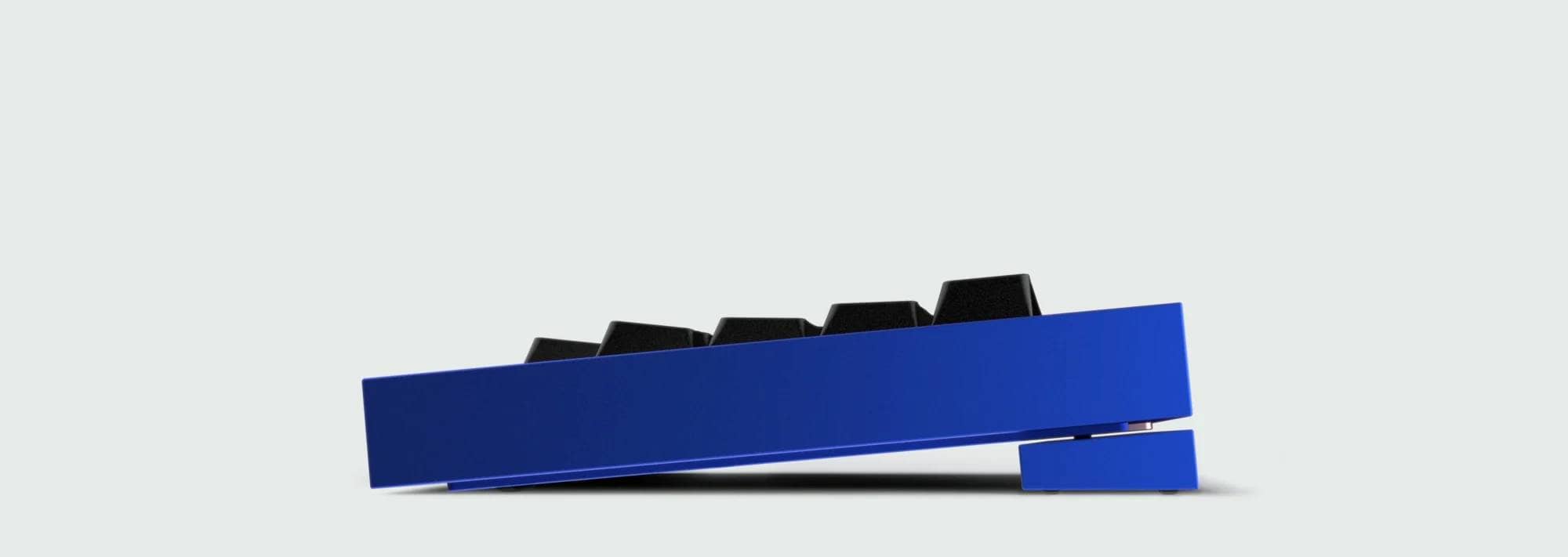
Additionally, keyboards with typing angles tend to angle the wrists, and to use them comfortably in a low posture like a laptop, palm rests are often desired.
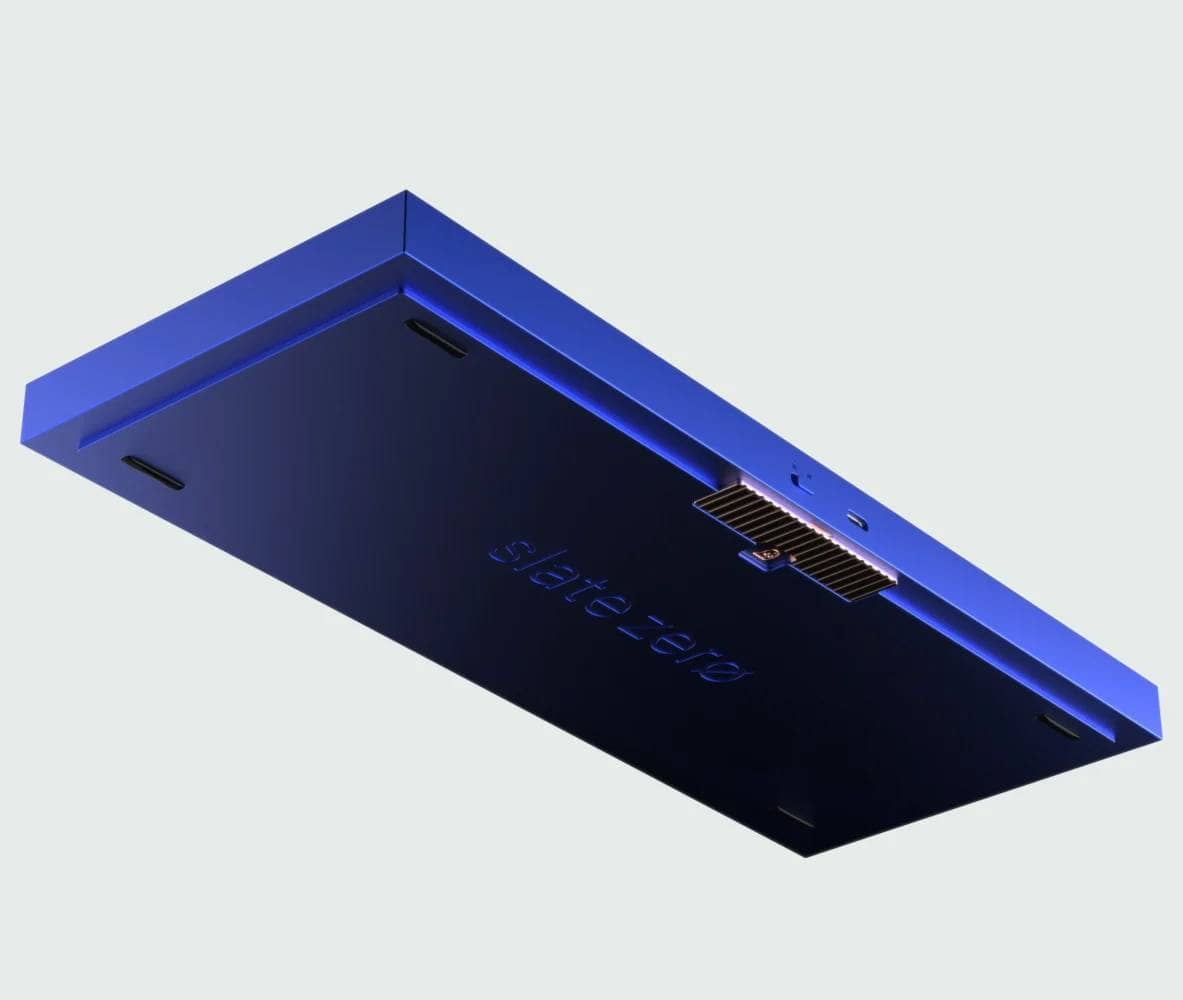
Slate Zero is designed to ensure sufficient lowness for comfortable use while maintaining case thickness that produces a premium, dense sound signature.
Kelvin explains that this was a major engineering challenge.
However, they also understand that depending on typing philosophy and style, some may prefer keyboards with sufficient typing angle.
Therefore, they also prepared a rizer option that can create a 5-degree typing angle, allowing users to choose an angle that suits their typing preferences while maintaining Slate Zero’s architectural beauty.

Visual Symmetry and Multi-Layout Flexibility
In Brutalist form, visual stability is one important element.
This is because giving a central visual axis to heavy forms makes them easier to see not as mere roughness but as intentional structural beauty.
Slate Zero creates visual calmness appropriate for Brutalist case design by maintaining the familiarity of compact layouts while adjusting the left-right appearance and balance with the case.
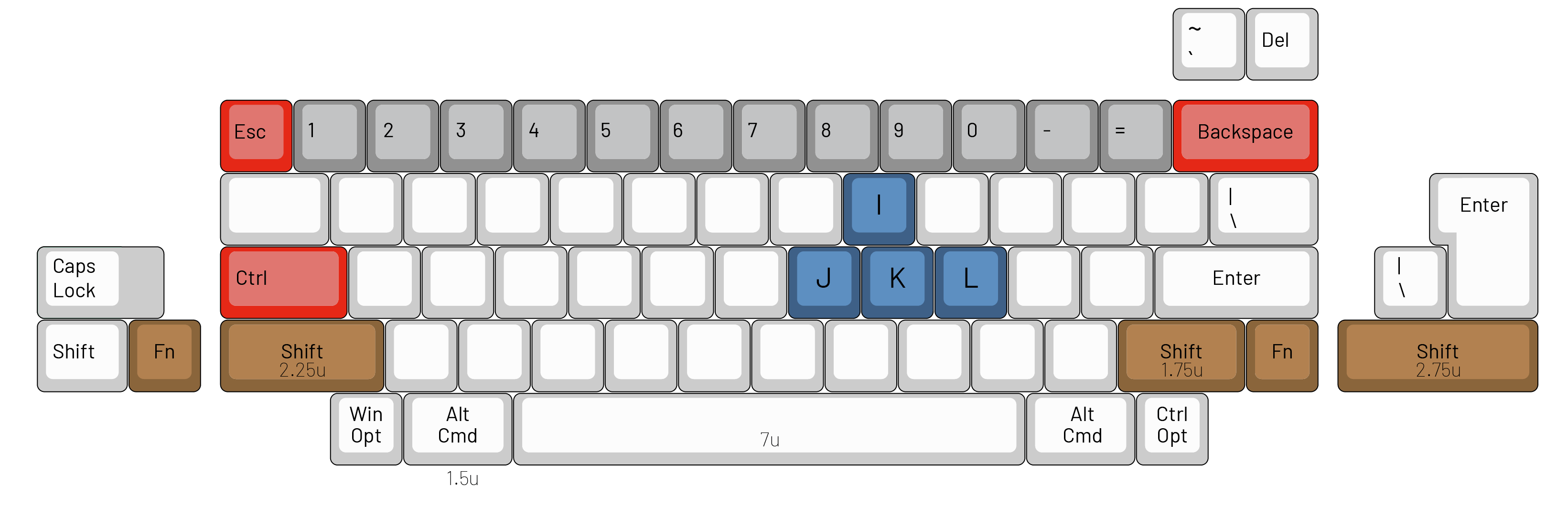
Additionally, by adopting the 7u spacebar, which has high versatility in the custom keyboard genre, it appears to create a strong horizontal axis in the bottom row.
This seems to enhance the impression as a quieter, more stable structure while maintaining the familiarity of compact layouts.
This is where we can see why Slate Zero is not simply an HHKB-like 60%.
Additionally, Slate Zero’s feature is adopting multi-layout that achieves split backspace and ISO Enter without compromising appearance to accommodate various user key layout needs.
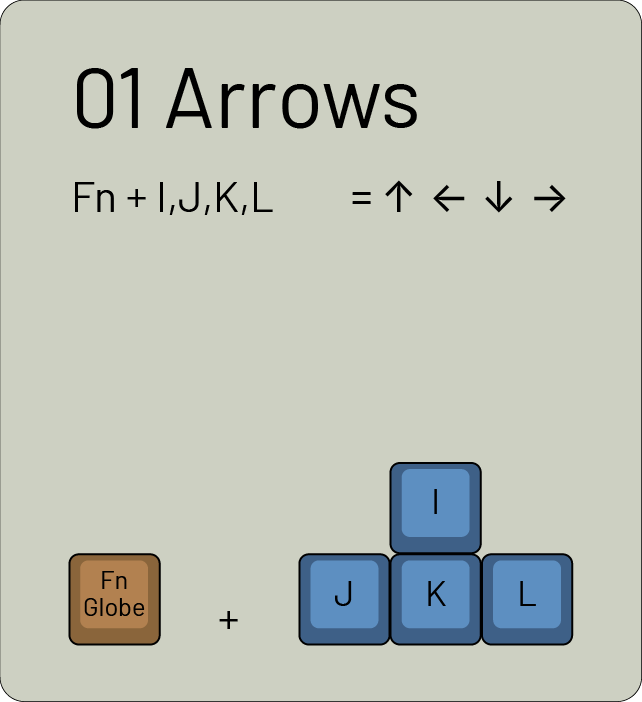
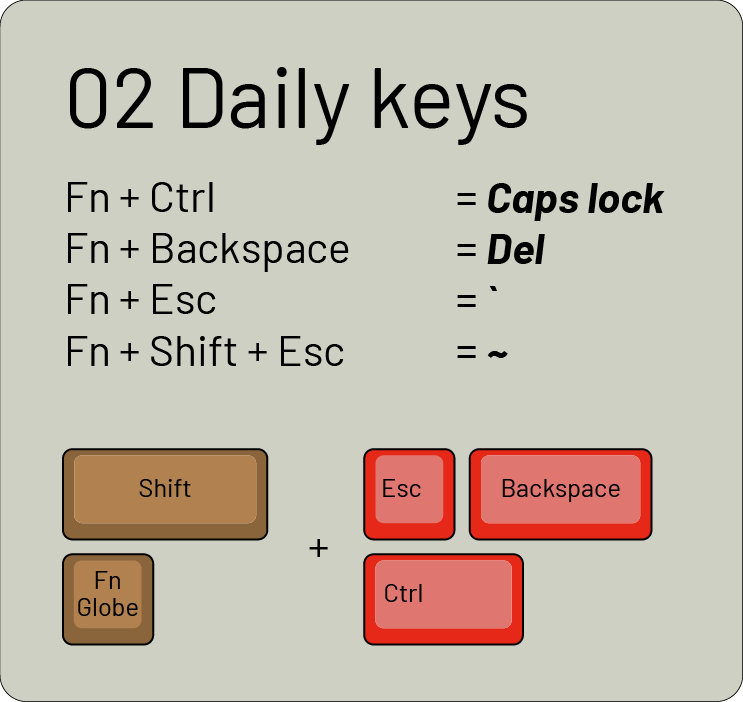
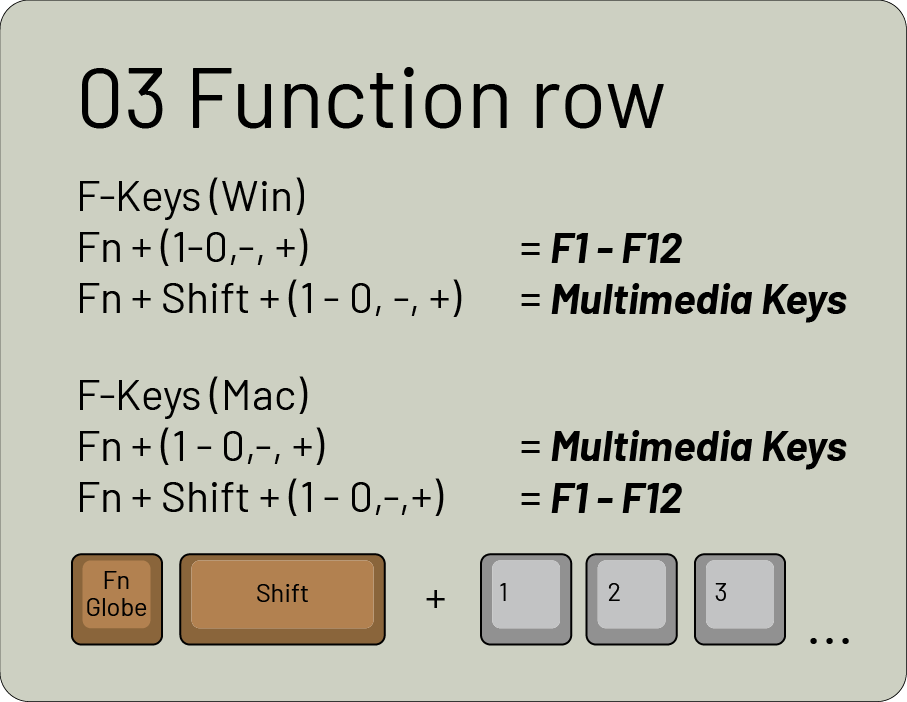
Seamless Integration Through Original Web App “Magware”

Slate Zero’s PCB is built on QMK.
Keymap changes are possible using “Magware,” a web app developed to support multi-layout and allow keymap changes on Mac.
Of course, this original web app also supports Windows.
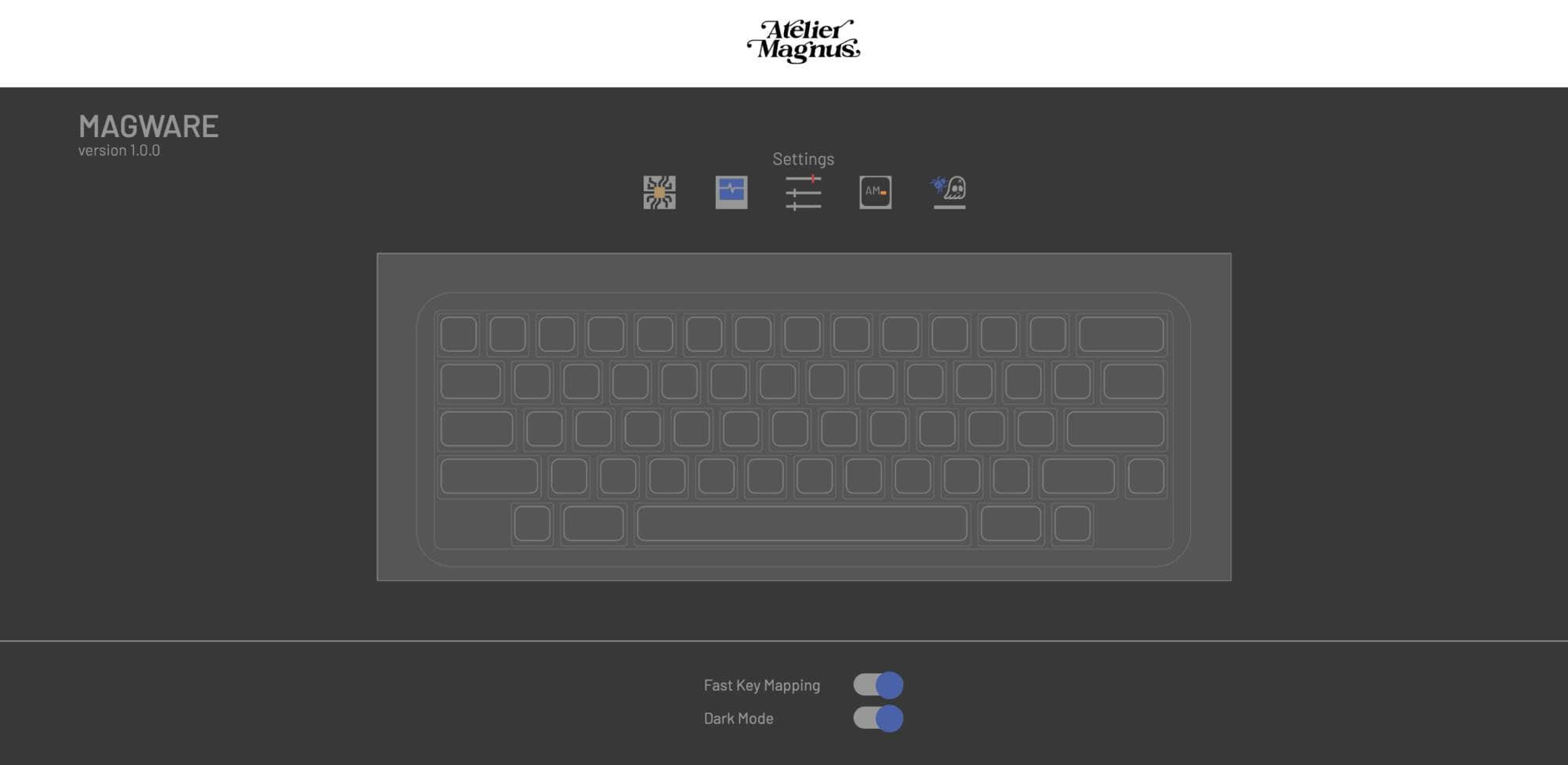
Additionally, for users who prefer VIA, keymap changes are possible in VIA by using the .json file available on the official website.
Also noteworthy is the physical switch on the keyboard’s back that allows instant switching between Windows and Mac.
Message from Kelvin to Japanese Users
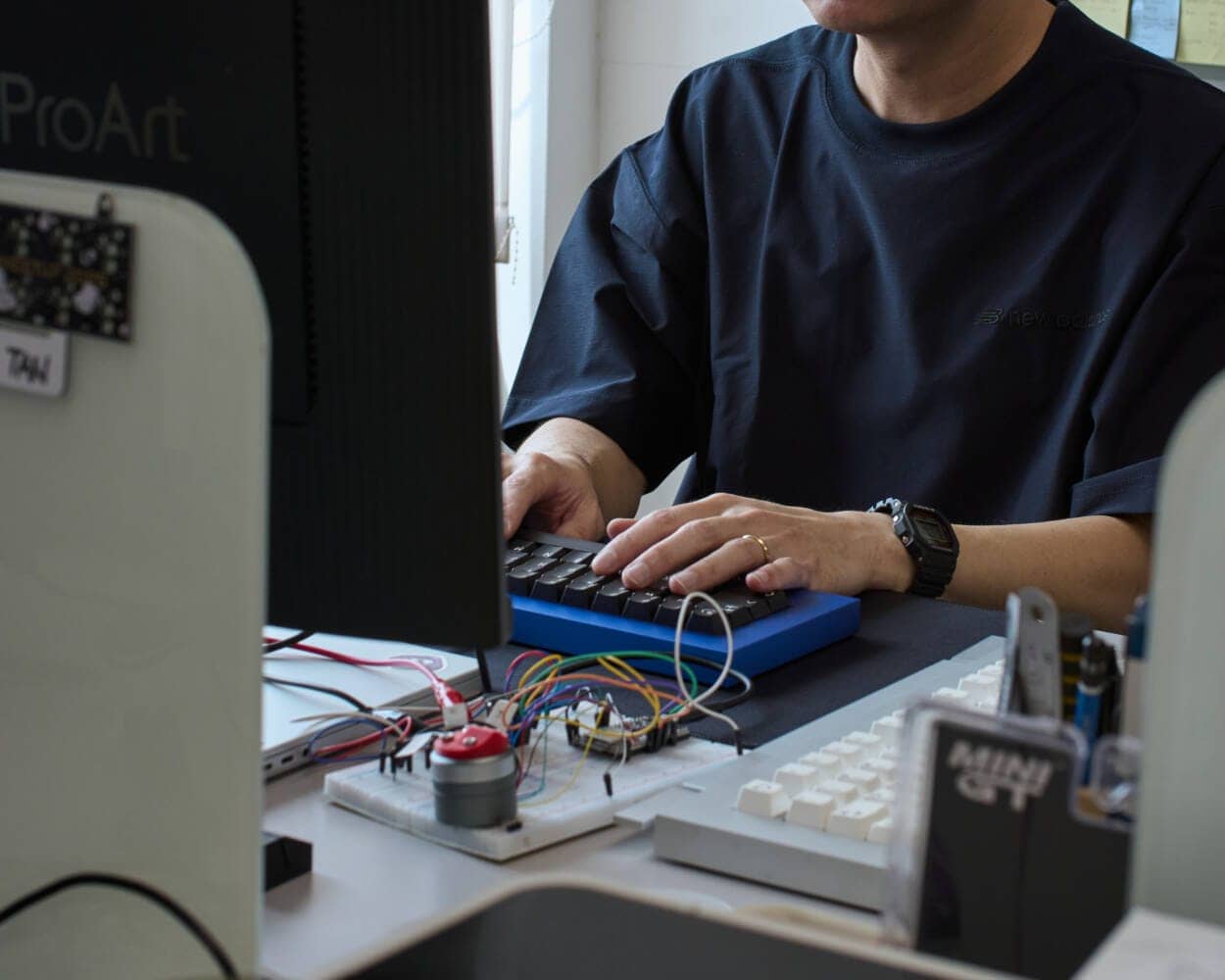
We want users to experience the Slate Zero as a ‘monolith.’ It is designed to be a piece of quiet, industrial art that blends seamlessly into a curated workspace rather than distracting from it. The goal is a sense of ‘refined ease’, where the weight of the 6063 aluminium and the stillness of the form create a focused, high-intent environment for the user.
Atelier Magnus is a studio dedicated to the harmony of heritage and modern industrial design. With the Slate Zero, our goal was not just to create a keyboard, but to offer a study in ‘primitive form’—the beauty of an object in its purest state. By refining the design to ‘Zero,’ we have removed everything unnecessary to focus on the honesty of the materials. We hope this keyboard becomes more than just a tool; we want it to be a permanent, artistic fixture on your desk. We have great respect for the Japanese community’s appreciation for the ‘soul’ of well-crafted objects, and we look forward to seeing the Slate Zero enter your creative spaces soon.
Who Is Slate Zero Suited For?
Based on the interview with Kelvin so far, Slate Zero seems compatible with the following types of users.
Who Is Slate Zero Suited For?
- Those who resonate with compact philosophy
- Those who value quietness and material quality on their desk
- Those who seek simple and beautiful things
Those Who Resonate with Compact Keyboard Philosophy
Slate Zero is a product compatible with those who resonate with compact keyboard philosophy.
If you seek HHKB’s typing feel, layout, philosophy, and history itself, naturally choosing HHKB is the right choice.
On the other hand, for those who resonate with the rationality of compact keyboards connected to HHKB and Apple M0110 and the beauty as a tool that fits in your hands, and seek the texture of aluminum cases and architectural beauty, Slate Zero can be an interesting option.
Those Who Value a Quiet Desk Presence and Material Quality
Kelvin describes Slate Zero as a “monolith.”
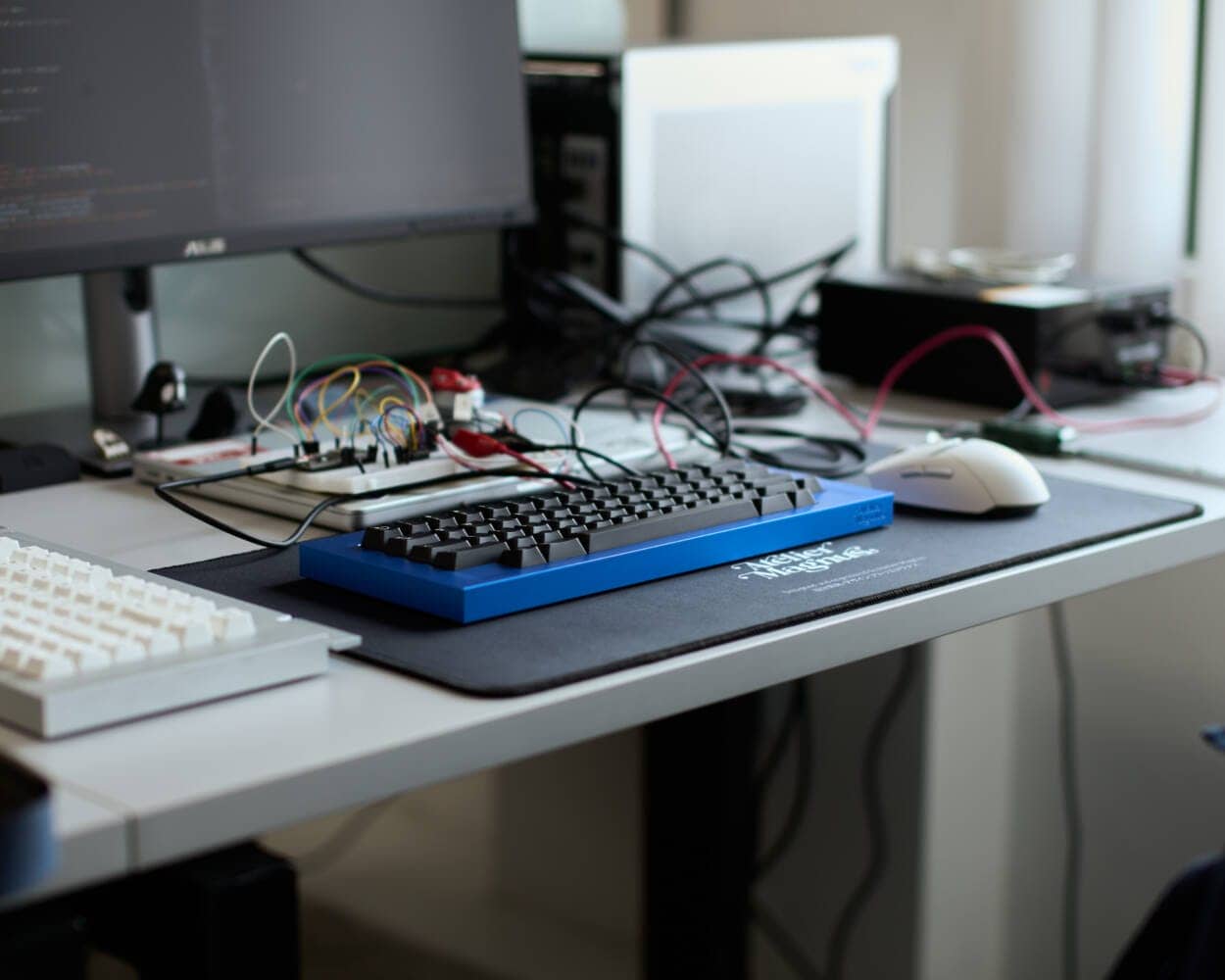
When placed on a desk, it doesn’t assert itself too much, yet has a definite presence.
As a quiet piece of industrial art, it blends naturally into a curated workspace.
This direction seems compatible with users who value material quality, form, and presence over flashy lighting or decoration.
Through the solid weight of the 6063 aluminum case and the horizontal, quiet form, Slate Zero aims for a presence as a tool placed on a desk rather than just an input device.
It seems to be a keyboard that can be appreciated not only for its function, but also for its presence as a tool on the desk.
Those Who Seek Simple, Beautiful Tools
Kelvin explains that Slate Zero removes unnecessary “geek complexity.”
While custom keyboards are fun, they can appear complex to beginners.
There are many things to consider, including layout, PCB, firmware, keymap, supported OS, and build procedures.
Slate Zero is not a product that eliminates all such complexity.
However, it attempts to reduce some of the complexity of configuration and assembly and organize it toward natural use as a tool.
This can be said to be a design conscious of long-term use as a daily tool rather than just a keyboard for enthusiasts.
Summary
Summary
Slate Zero is not a keyboard that aims to replace the HHKB.
Rather, it can be seen as a 60% custom keyboard that respects the compact keyboard culture symbolized by the HHKB, while reinterpreting that culture through Atelier Magnus’s perspective: a 0-degree typing angle, visual symmetry, material honesty, and a quiet presence on the desk.
From Kelvin’s words, it becomes clear that Atelier Magnus designed Slate Zero not simply as a collection of specifications, but with a strong awareness of its presence as a tool on the desk.
For that reason, Slate Zero seems best suited not for those who want to replace the HHKB itself, but for those who resonate with the rationality of compact keyboards and are drawn to an aluminum case, a low horizontal profile, visual symmetry, and a quiet architectural presence.
Slate Zero is available through multiple regional group-buy partners worldwide. Please choose the vendor for your region, as availability, pricing, currency, shipping, taxes, deadlines, and after-sales support may vary by vendor.
Slate Zero is a keyboard that respects existing compact keyboard culture while reinterpreting it through Atelier Magnus’s aesthetic lens.
If you are interested in keyboards where design intent matters as much as specifications, Slate Zero may be worth checking out.
Slate Zero is available through multiple regional group-buy partners worldwide. Please choose the vendor for your region, as availability, pricing, currency, shipping, taxes, deadlines, and after-sales support may vary by vendor.
Global Group Buy Partners
- United Kingdom / Europe: proto[Typist]
- North America: Keybay Tech
- France / Europe: Keycapsule
- South Korea / Global: GEONWORKS
- China: Typist Club
- Vietnam: Sói Gear
- Thailand: Aiglatson Studio
- Malaysia: Mecha
- Singapore: ktechs
- Australia / New Zealand: Keebz N Cables
- Japan: Yushakobo
- Official Store: Atelier Magnus
- First edition written: May 16, 2026
- Last updated: May 16, 2026
- Research method: Sales page reference, Atelier Magnus provided information
- References and citations:
- Conflict of interest: Product provision: None, Monetization links in article: None, Article production fee: Yes (produced based on request from Atelier Magnus)


Google検索の「優先ソース」にGreenkeysを追加します
Add Greenkeys as a Preferred Source on Google

